
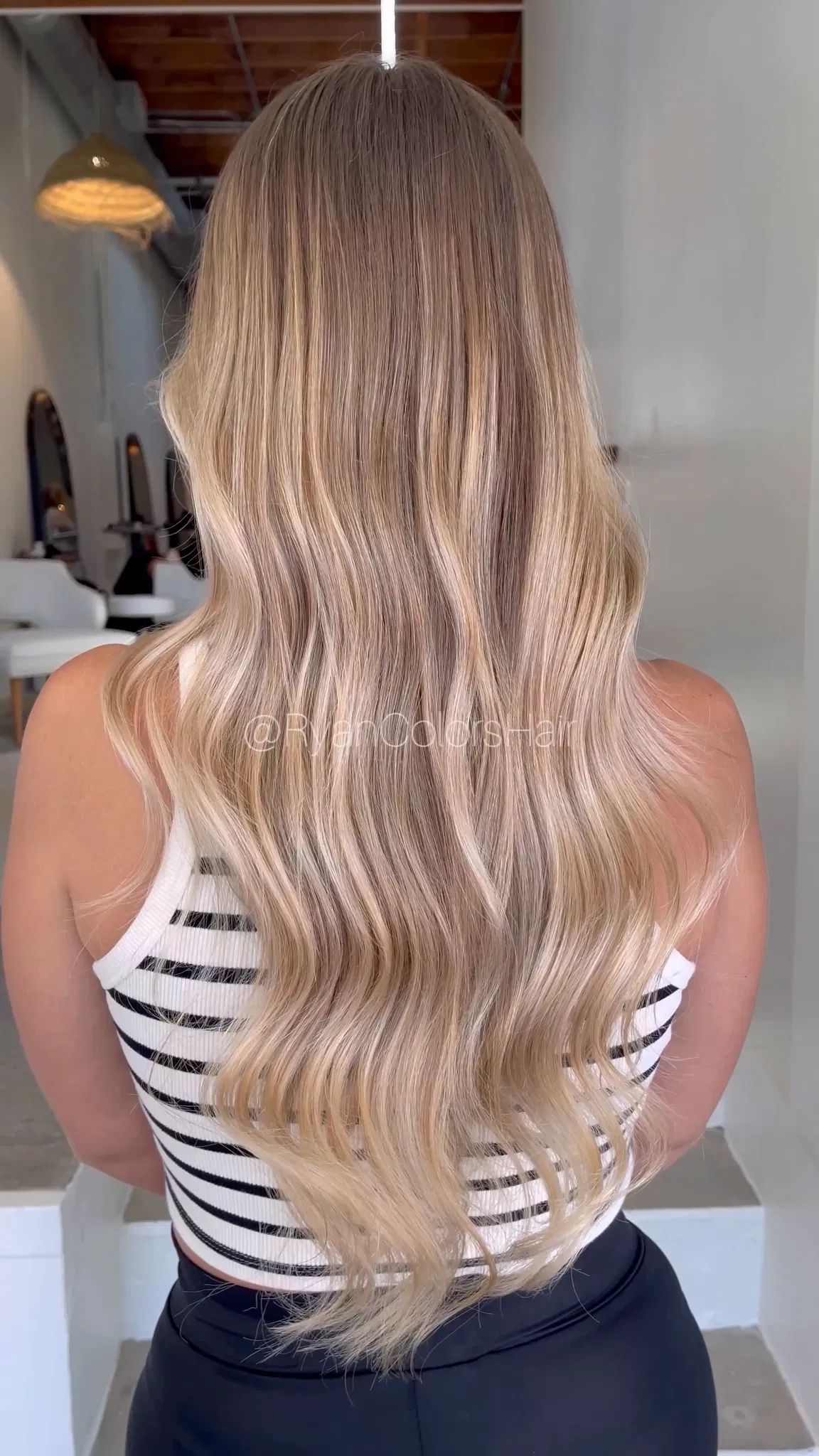
Balayage often allows around 3–6 months between lightening appointments, but the tone can need attention sooner. Your starting color, placement and preferred brightness matter more than a fixed calendar date; a gloss refresh is not the same service as adding more highlights.
- Balayage can allow 3–6 months between lightening visits; that is a planning guide, not a guarantee.
- A gloss refreshes tone; it does not replace a balayage appointment when you want more lightness.
- Lived-in hair color needs a plan for grow-out, brightness and home care—not just fewer appointments.
- RyanColorsHair offers personalized balayage and hair color for clients in Houston and surrounding communities.
Why your maintenance plan matters
Low-maintenance color should fit your life, not leave you wondering whether you have waited too long. You might still love the placement of your blonde while noticing that the ends look warmer, the face frame feels less bright, or your hair needs a trim.
Those are different concerns. They do not automatically call for a full lightening service.
I approach balayage and customized hair color by considering your natural base, previous color, hair condition and the result you want to maintain. Before choosing inspiration photos, think about what you want your hair to look like between appointments—not only on the day you leave the salon.
How long does balayage last?
Around 3–6 months is a useful starting point for discussing a balayage refresh, not a promise that every look needs the same schedule. Some placements need attention sooner; softer, lower-contrast designs can grow out for longer.
There are also different meanings of “last.” Lightened sections do not simply return to their original color when an appointment becomes due. Your roots grow, the placement moves down, and the tone of the lightened hair can change.
Wella Professionals' published balayage guide describes a broad interval from 3 months to a year, depending on root placement, growth and care. L’Oréal Paris' gray-blending guidance gives 3–6 months for balayage and foilyage refreshes. These are general category references checked in October 2026, not a prediction for your individual hair.
The most useful question is: Which part of my color needs refreshing?
| What you notice | Service to discuss | What it does not automatically mean |
|---|---|---|
| The tone looks warmer or less refined | Glossing or tonal refinement | You need to lighten all your hair again |
| You want brightness closer to your face or roots | Targeted highlighting or a balayage refresh | Every previously lightened section needs more lightener |
| The overall placement no longer suits your goal | A review of your color plan | A gloss alone will create new highlights |
| Gray regrowth bothers you | Gray blending or root-color options | Balayage alone provides complete gray coverage |
A service decision should follow the concern, rather than treating every visit as a repeat of the first one.
Your tone can need attention before your balayage placement
Blonde placement and blonde tone are related, but they are not interchangeable. You can still have a soft blend at the roots while the lengths no longer look like the beige, neutral or warm blonde you originally wanted.
Wella's general maintenance guidance discusses toner refreshes around 6–8 weeks. That gives you a reference point for a conversation, not a standing instruction to book a particular service on that date.
A gloss or toner can refine the appearance of existing lightness. It does not create the same change as a lightening service, and it cannot substitute for adding brightness where there is none.
Best for tonal refinement: discussing a gloss when you like the placement but want to address unwanted warmth or faded tone.
Limitation: if your goal is a brighter overall result or lighter pieces closer to the scalp, tonal refinement alone may not achieve it. That needs an assessment of your starting point and hair condition.
I would rather identify the change you actually need than assume every color concern calls for more lightener.
A softer root changes how your color grows out
Balayage can create a softer transition between your natural color and the lighter lengths. How that transition is designed affects how noticeable the grow-out feels.
A result that preserves more of your natural base has a different maintenance commitment from one with substantial brightness close to the scalp. Neither is automatically better. The right choice is the one that matches your preferred look and the visits you can realistically maintain.
Best for a gentler grow-out: discussing a lived-in result with deliberate depth and a soft transition.
Limitation: keeping more depth means you may not have the same root-to-end brightness as a more intensive blonde transformation. If your inspiration is very light throughout, it is worth talking through that trade-off before the service.
Bring photographs of both your ideal blonde and a grown-out result you still like. That second image helps explain what “low maintenance” means to you much more clearly than the phrase alone.
Why balayage maintenance varies
There is no useful schedule that ignores the hair you start with. These are the factors I want to understand before discussing your next appointment:
- Your natural base: the difference between your roots and your desired blonde affects how the transition looks as it grows.
- Your previous color: box dye, professional color, lightening and other chemical services all belong in the consultation.
- Your preferred placement: brightness close to the face or scalp has a different upkeep commitment from a softer, deeper design.
- Your tone preference: a cool or neutral finish can feel different to you as the tone changes than a deliberately warmer result.
- Your hair condition: the next service needs to respect what your hair can reasonably tolerate, not just what a photograph shows.
- Your routine: washing, styling and the products you use are part of the maintenance discussion.
Your priorities can change, too. A look that suited a period when you could visit regularly might not suit a busier schedule. Tell me that before your appointment so the color plan can reflect it.
How to care for balayage between appointments
A manageable routine starts with advice suited to your hair, not a shelf full of products bought because they were labelled for blondes. My service guidance emphasizes professional home care, heat protection and a personalized maintenance schedule.
Choose care for the hair you have
Discuss a shampoo and conditioner suitable for color-treated hair and your hair's condition. Wella's published balayage guidance also recommends color-safe cleansing, hydrating care and heat protection.
Do not assume that the same routine suits every blonde. Fine hair, previously lightened lengths and a deeper dimensional result can need different approaches. Bring the names of your current products so the conversation can be specific.
Ask before adding a toning product
Purple shampoo is not a replacement for a consultation or a professional color service. It is also not automatically the answer to every shade that looks too warm.
Tell me what you are seeing: yellow, orange, dullness, an uneven area, or simply less contrast than you want. Describing the concern helps distinguish a tone issue from one that needs a different service.
Include your styling habits
If you regularly blow-dry, use hot tools, swim or spend time outdoors, mention that when discussing home care. Your routine is more useful information than an ideal routine you are unlikely to follow.
For Houston clients, a realistic plan should also account for how you actually style and wear your hair. Humidity changing the finish of your blow-dry is not, by itself, evidence that your balayage needs redoing.
Keep track of what changes first
Notice whether your first concern is tone, face-framing brightness, root contrast or condition. You do not need to diagnose it yourself; a clear description and current photographs help start the conversation.
Avoid comparing a freshly styled salon photograph with hair photographed under completely different lighting. Look at your color in natural light before deciding that the shade has changed dramatically.
Do I need a full balayage at every appointment?
No—a full balayage is not automatically the right service at every visit. If you still like the placement, the conversation might be about tone, targeted brightness or maintaining the overall shape of your color.
More lightening is not a substitute for deciding what you want to change. I consider your existing color and condition before planning the next step.
Can balayage cover my gray roots?
Balayage and complete gray coverage are different goals. Lightening and dimensional placement can be part of a gray-blending plan, while a client who wants opaque coverage of regrowth needs a conversation about root color.
Tell me whether you want to disguise gray, soften its contrast or cover it. Those preferences help determine the service rather than assuming that one technique answers every concern.
What should I bring to a balayage consultation?
Bring inspiration photos, current pictures of your hair in natural light and an honest account of your color history. Include home color, henna, previous lightening and chemical treatments, even if they happened before your most recent appointment.
Also tell me how often you want to return and what you do not want: a strong root line, very bright ends, warmth, or an intensive styling routine. A clear boundary is as useful as an inspiration photo.
FAQ
How long does balayage last before I need it redone?
Around 3–6 months is a general planning guide for a balayage lightening refresh, not an individual guarantee. Root placement, your desired brightness and hair condition can change that interval.
Does balayage wash out completely?
Lightened sections do not wash back to their original natural color. The tone can change while new roots grow and the lighter placement moves farther down the hair.
Why does my balayage look warmer even though the roots still blend?
Tone and placement can change on different schedules. If you like the placement but not the warmth, discuss tonal refinement rather than assuming you need a full lightening service.
Can a gloss make my balayage lighter?
A gloss is used for tonal refinement, not as a substitute for a lightening service. If your goal is new brightness or lighter placement, your hair needs to be assessed for the appropriate service.
Is balayage a good choice if I want fewer appointments?
A softer, lived-in placement can suit someone who prefers a less pronounced grow-out. It still needs appropriate care, and a very bright or high-contrast result can involve a different maintenance commitment.
Should I book balayage or gray coverage?
Choose the appointment around the result you want: blended dimension and opaque gray coverage are not the same goal. Share your gray-coverage preference before booking so the service can be planned accurately.
Can I ask Ryan about my hair before choosing an appointment?
Yes. If you are unsure which service fits your starting point, please contact me directly to discuss your hair history and desired result before choosing an appointment.
One last thing: plan for the grow-out you want
A beautiful maintenance plan starts with the result you still want to wear later. Saving an inspiration image is helpful; explaining what you like about it is better. Is it the soft root, the brighter face frame, the contrast, or the tone?
I bring more than 17 years of professional experience to personalized hair color at RyanColorsHair. My focus is a considered plan for your starting point and desired result—not a promise that every head of hair follows the same timetable.
If you are considering balayage in Houston or the surrounding area, please contact me directly with your current hair photos and goals. I can help you discuss the next step without guessing which service name to select.